CookJam leverages community recipe sharing to evoke memories grounded in different places
Deciding what to cook can be hard
Deciding what to cook at home involves juggling a recipe’s appeal, time constraints, available ingredients, dietary needs, and our kitchen skills. In this project, we focus on this decision-making stage of the cooking journey, setting out to make the complex process easier.
Surveys and interviews with 10+ international students show common grounds in their cooking habits
There are more than 1M foreign students enrolled at U.S. higher education, representing 4.6% of the total U.S. student population. We interviewed 10+ international students, who are more inclined to cook their meals instead of eating out.
Alleviate homesickness through making indigenous food
People often turn to cooking cultural meals from their hometown when they miss home or are feeling down in foreign places to recreate the feelings and heartwarming memories they once had.
Can not find the right cultural recipes easily, often seek help from family
People often have trouble finding the right recipes for what they want to cook because they can be unfamiliar with them or had other channels in accessing them before.
Have limited time and budget to organize each meal
Overwhelmed by all the learnings a student has to do, it can be hard for students to spare time to decide what to eat, have a stable time slot for cooking each day, or do grocery trips at their will.
Piecing together our findings, we asked:
How might we help international students alleviate homesickness through the meals they have and finding the recipes for them?
”
Emotional needs
- Feel comfortable and safe with familiar tastes
- A reminder of eating food back at hometown
- Feel less intimidated by the skills required to cook
- A “feel good” factor after making a dish that tastes similar to home
- Care about the quality and taste of food

Functional needs
- A time-saving way to get recipes for a busy week
- Get recipes that come from the home country
- Be cognizant of space at home especially with flatmates
- A way to help them decide what to cook when they don’t know what they should cook
Explored the contexts, behaviors, and emotion underlying each solution before reaching the final idea — CookJam
By identifying homesickness as the motivation for cooking, we opened up conceptual possibilities with Crazy 8 sketches.
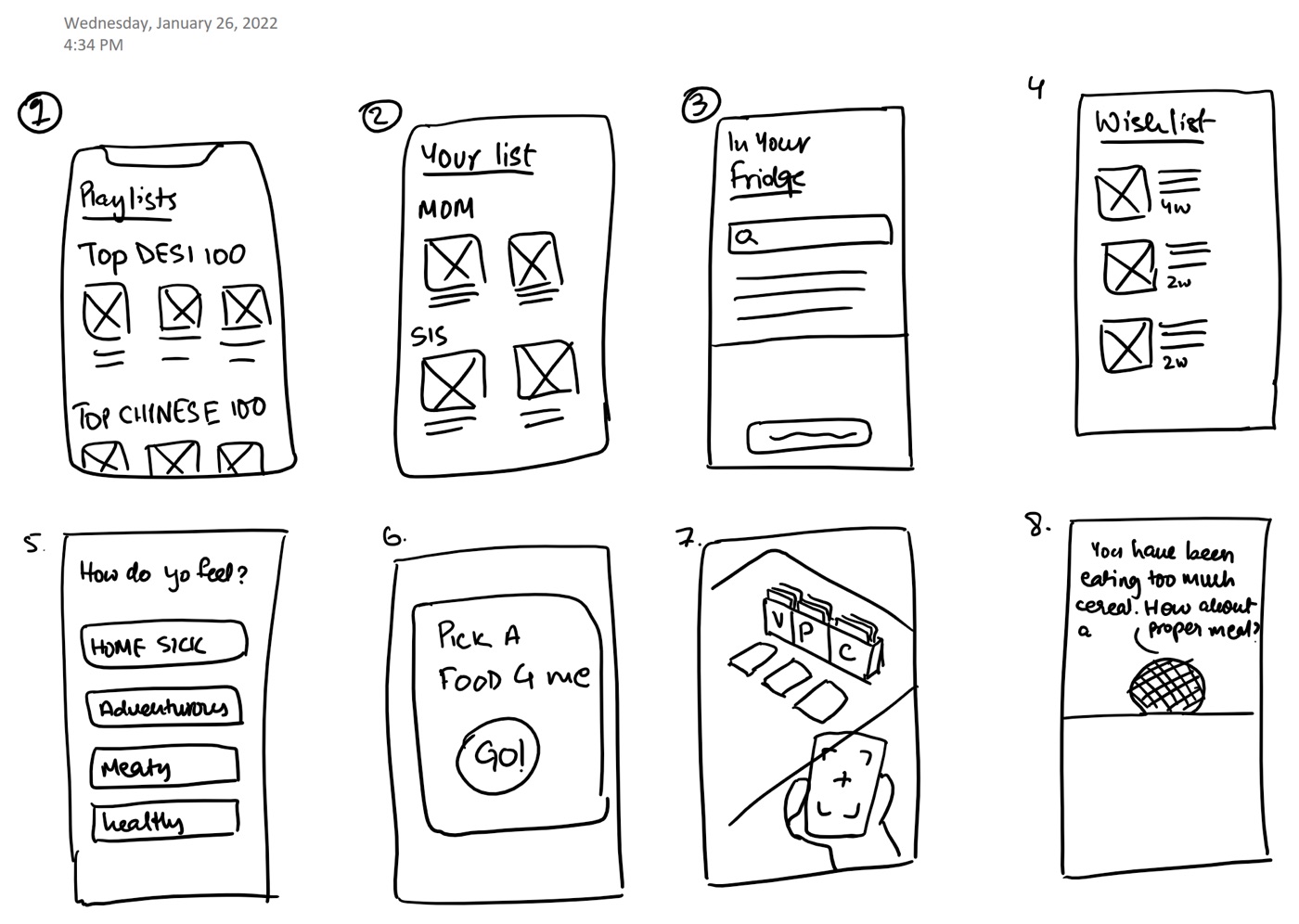
Deciding what to cook can be a lonely task.
Making decision into a community thing can eliminate decision making fatigue.
Must cook with available resources or what to get where.
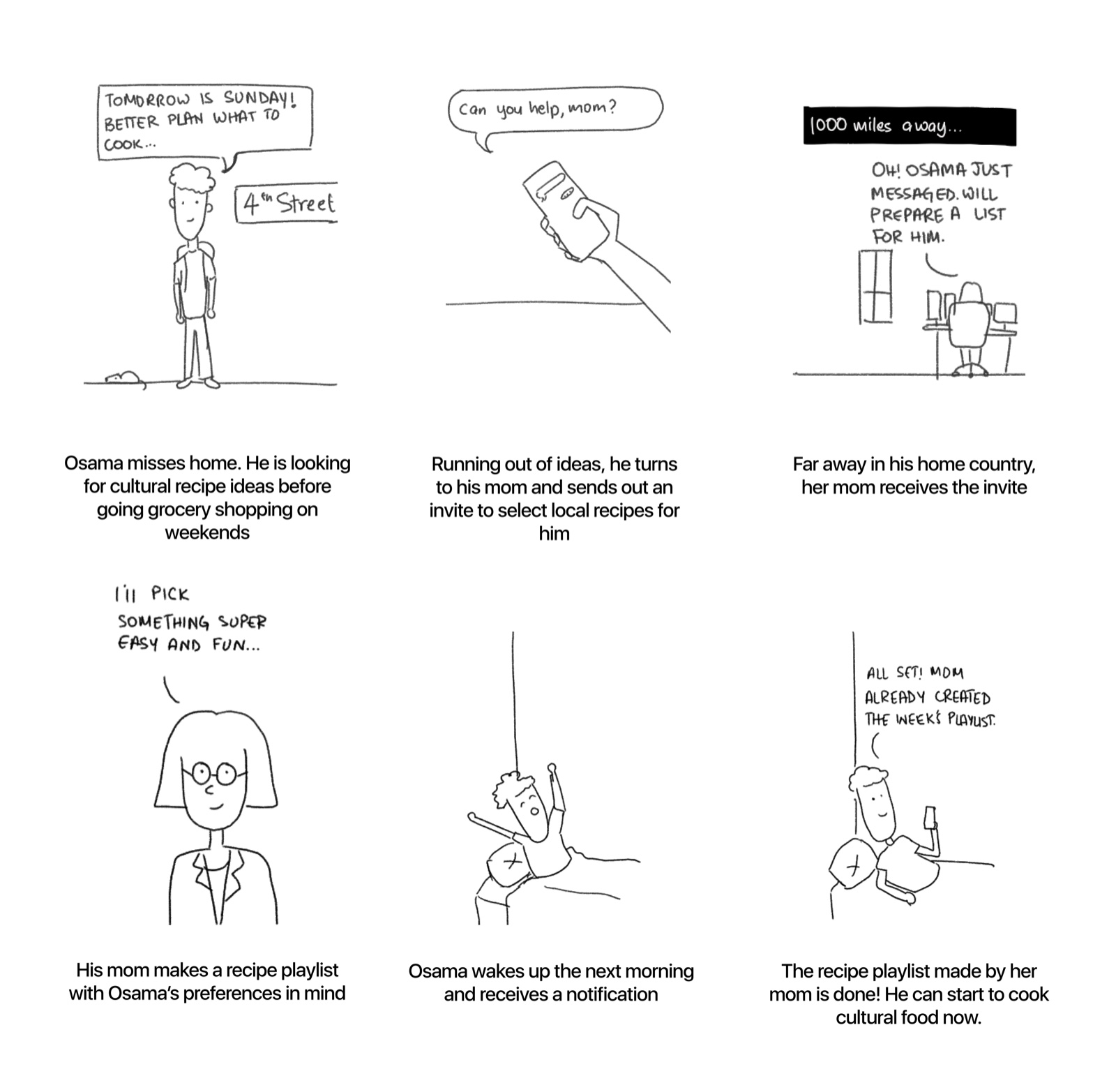
Illustrations imagined situational context
Where youngsters evoke memories grounded in different places through receiving indigenous recipes from moms.
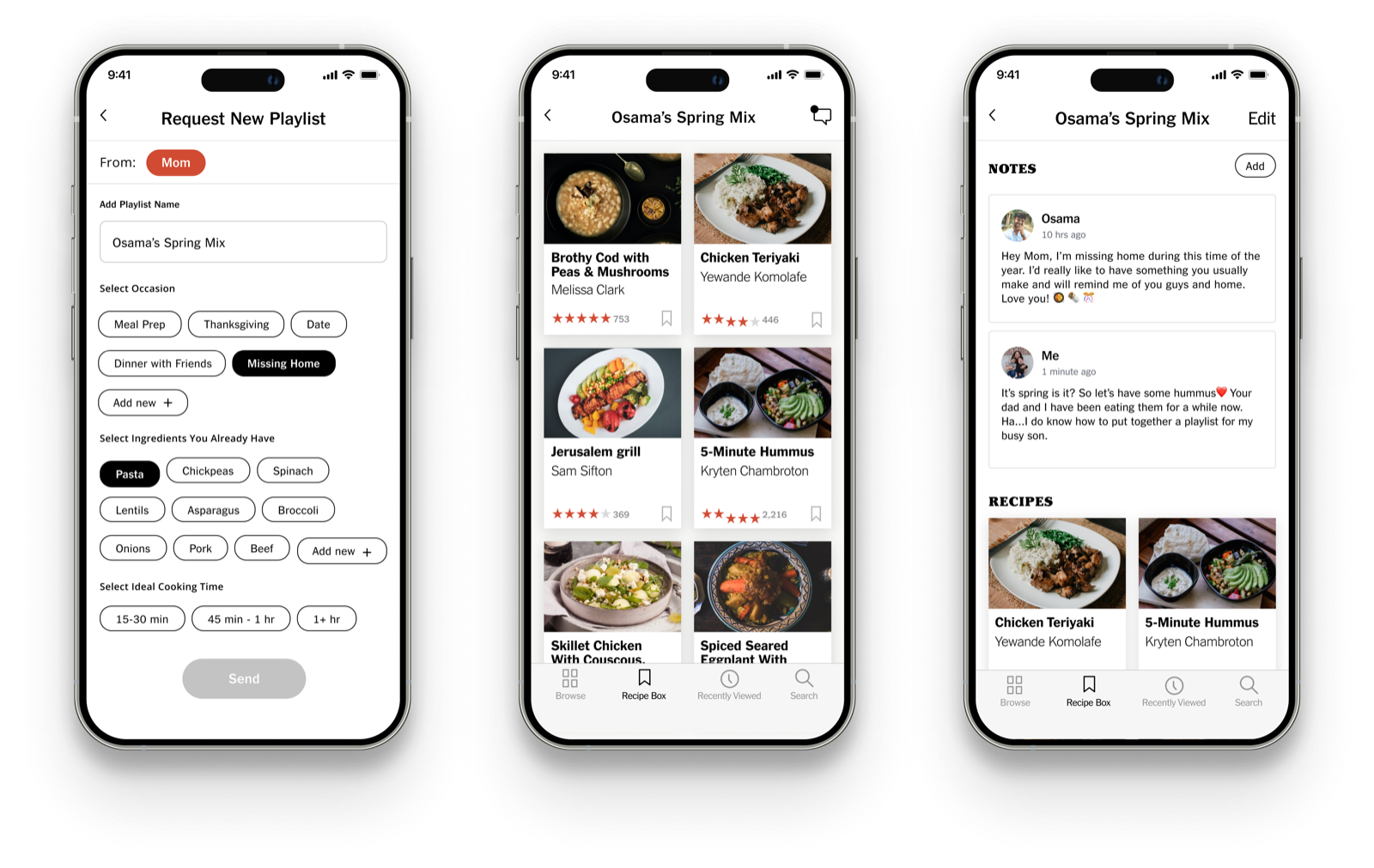
CookJam supports meal decision making and alleviates homesickness for foreign students
By providing a recipe shared space for cultural food and channels to connect with the community back home. We embed CookJam in the NYT Cooking app, one of the largest cooking apps with a diverse range of cultural recipes and ingredients one could find in the U.S. It offers a database of quality recipes and expertise to help home cooks from students to amateur chefs prepare great meals.

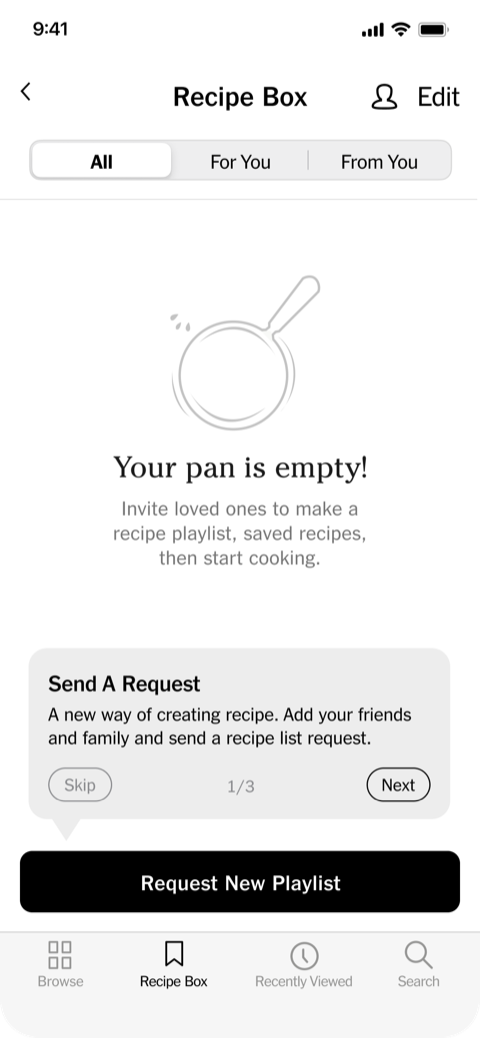
Initiator send invite to their loved ones
Send a request to your loved ones alongside your preferences, ingredients available, and a personal note.
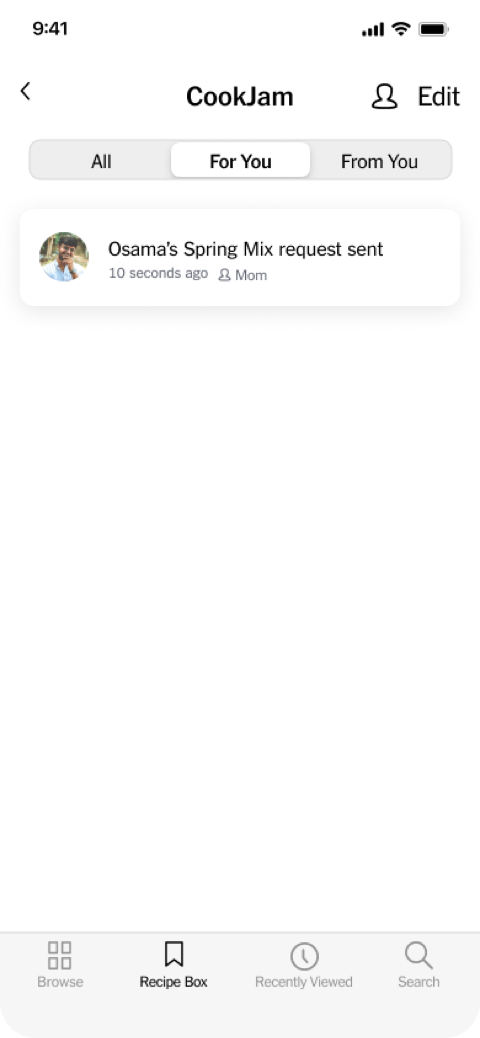
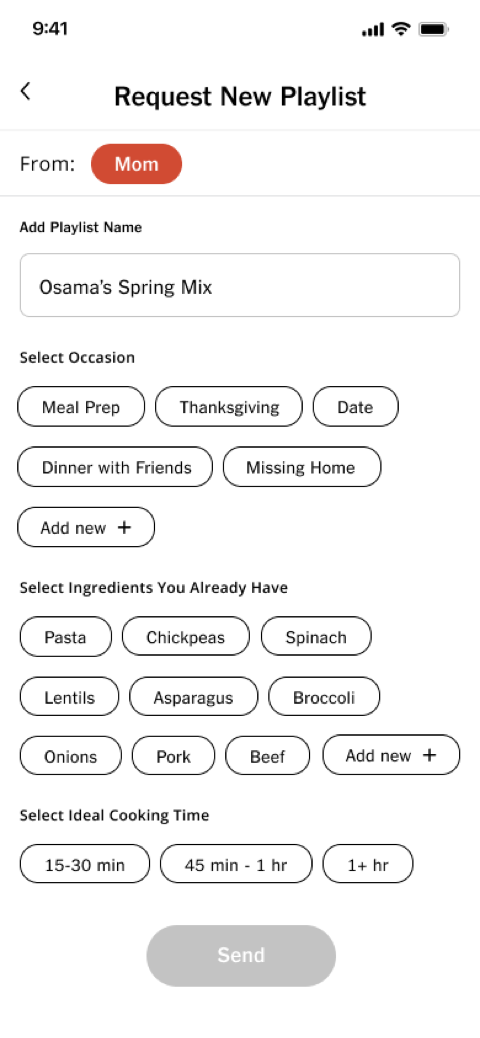
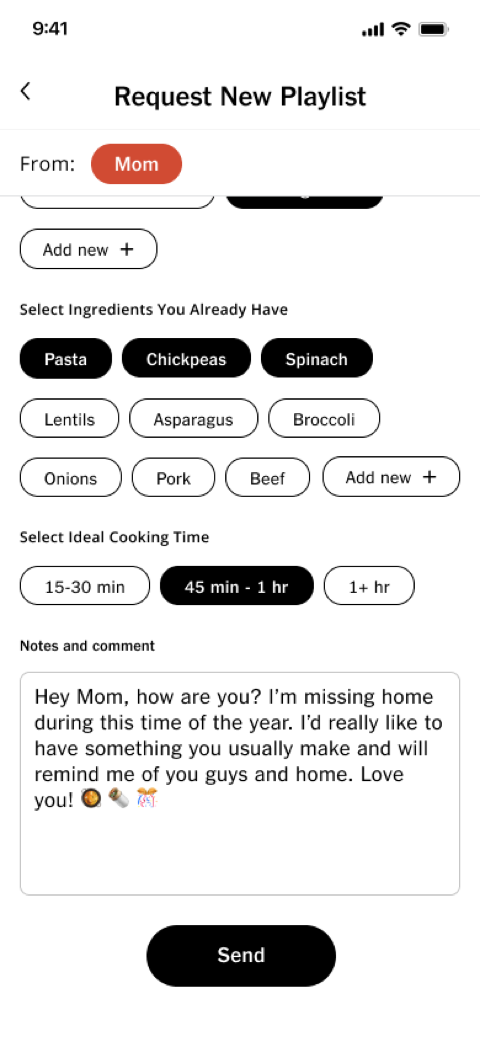
And receive recipe mix
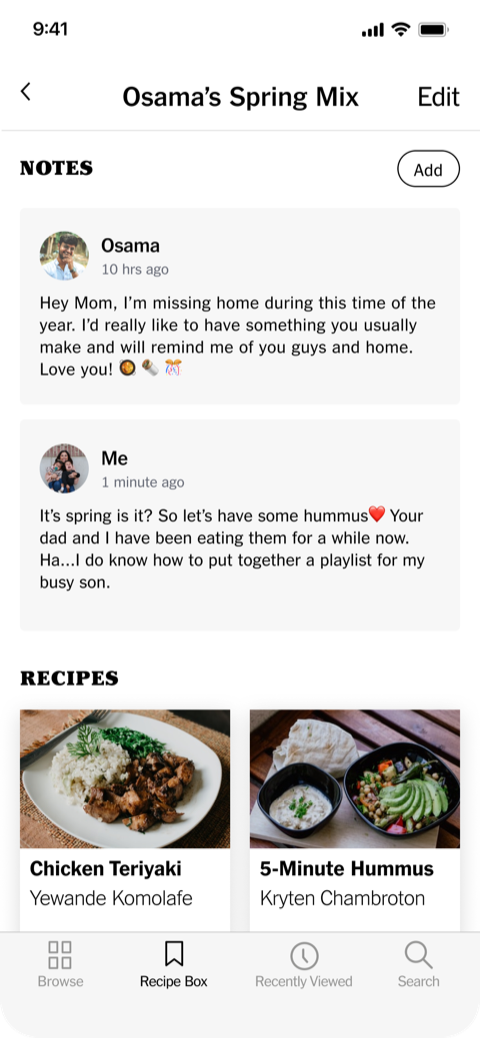
Receive a recipe playlist made just for you and leave comments for more information. Now, you are ready to meal prep and cook.
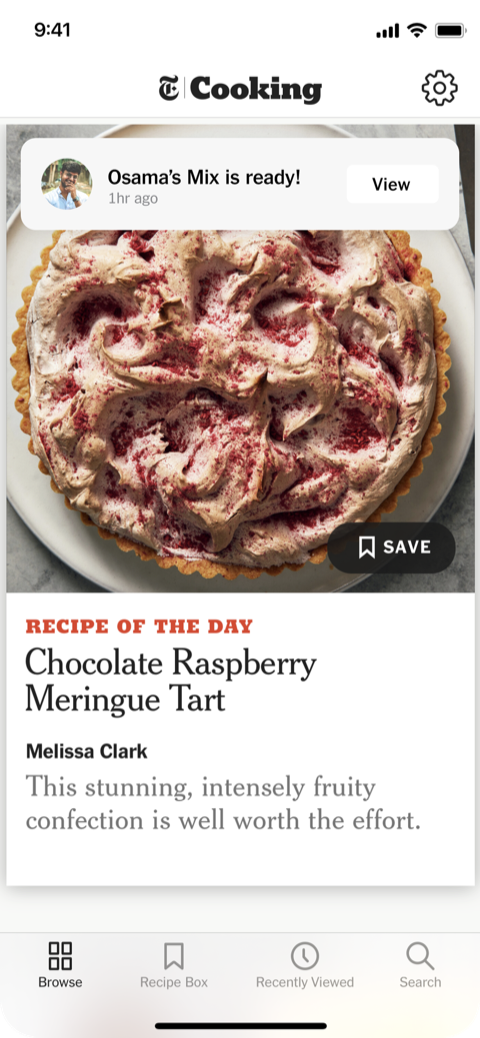
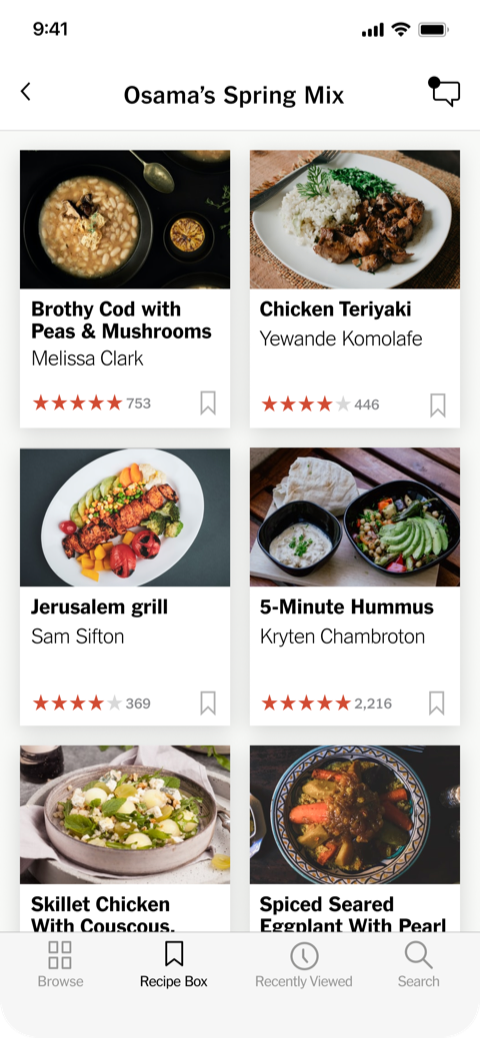
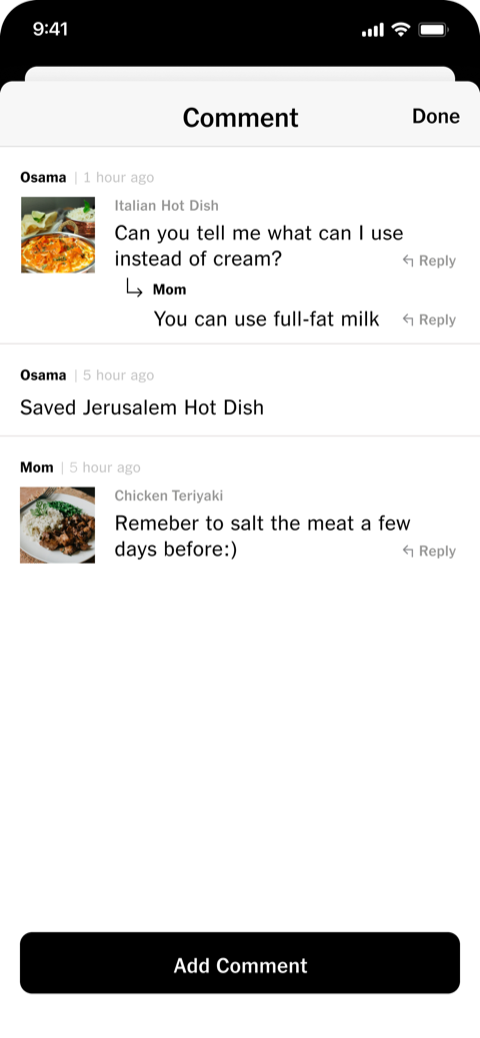
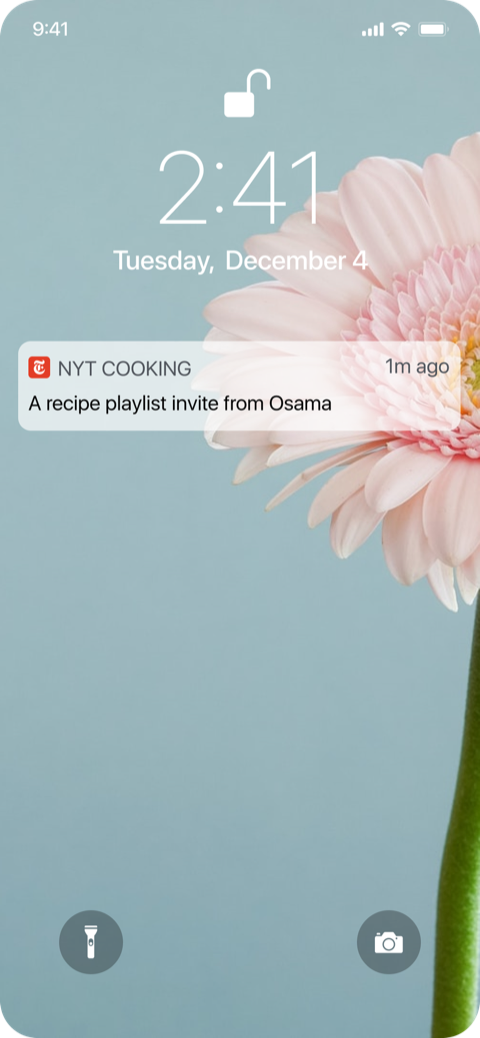
Invitee accept the request
Got a notification from your loved ones miles away, approved the request, and started putting together a recipe playlist with the existing database.
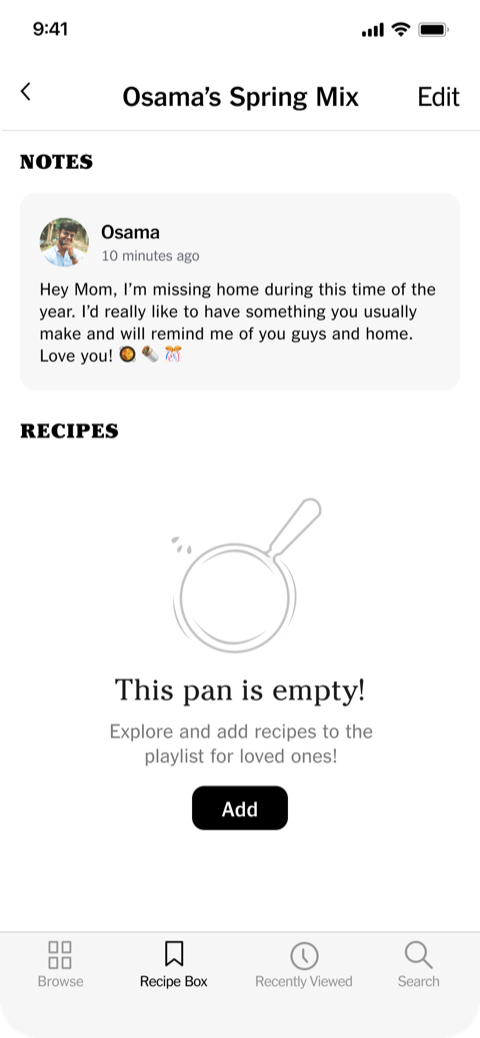
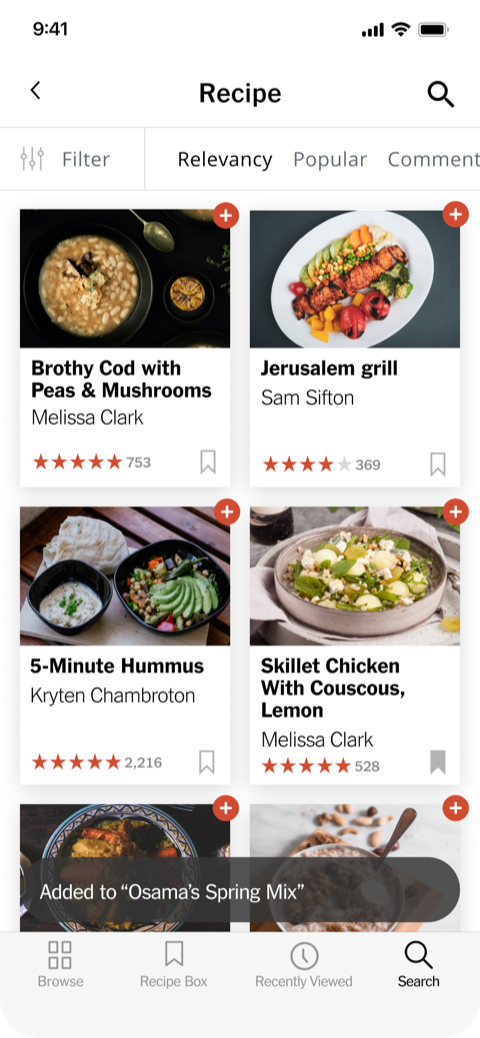
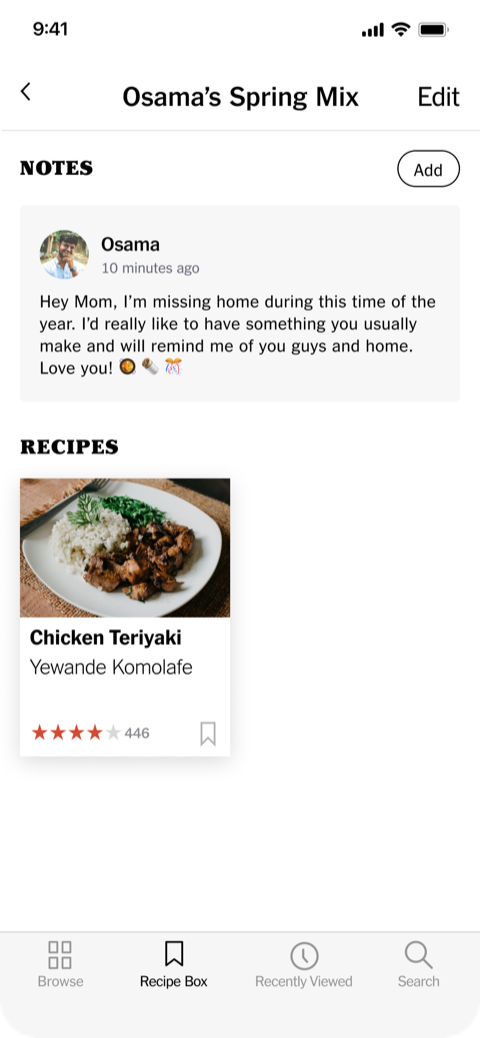
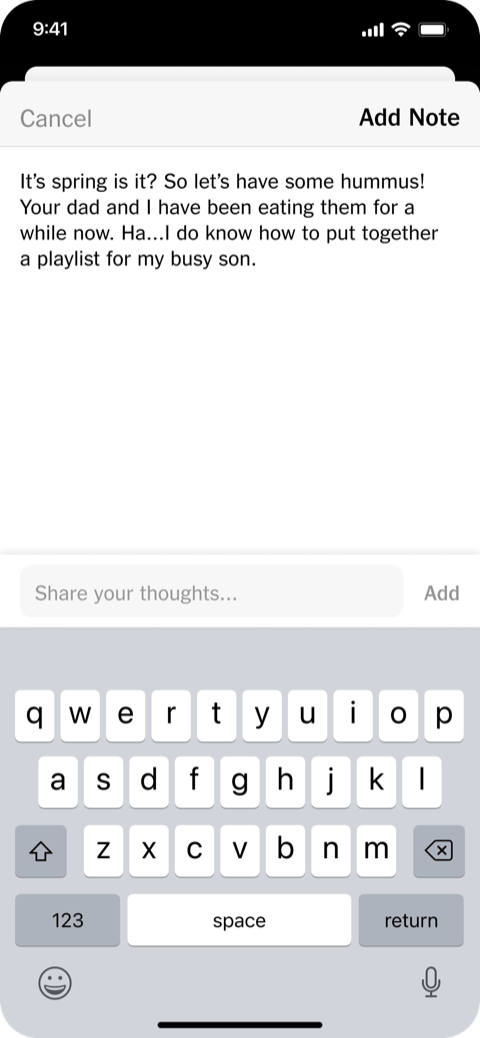
They create recipe mix and leave notes
Leave notes or special reminders for the people you are making the playlist for to support their cooking process.
We found that, first, our design also resonates with the friends and family back home
Our team conducted additional interviews with people back home (moms and dads), product walkthroughs with subject matter experts, and usability testings to further validate our design.

It really touches on how parents are willing to do anything to help their children no matter where they are.

Not just the recipe itself, we can also teach them the origin or meaning behind each indigenous dish they make.

For me, it depends on how much my kids engage with this feature. It determines how much I want to get involved as well.
But we also had to change a few things
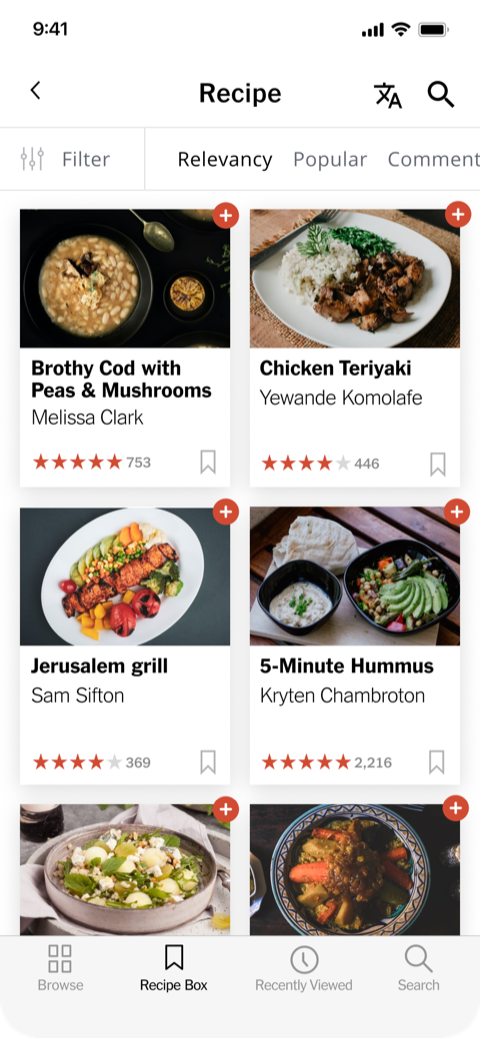
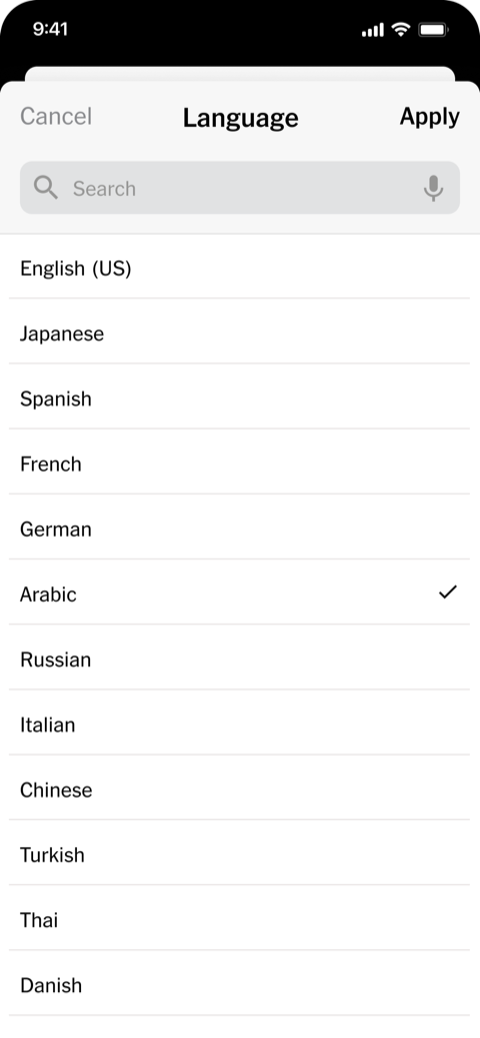
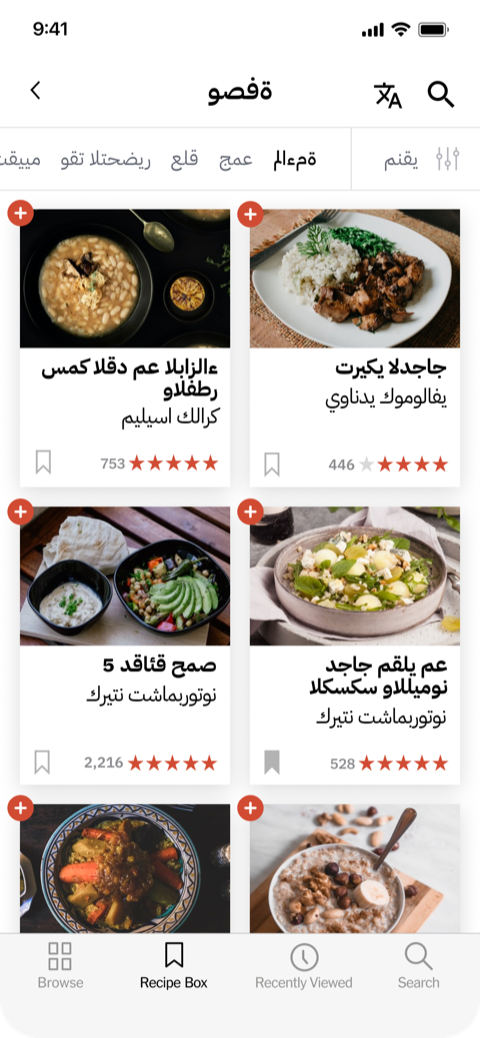
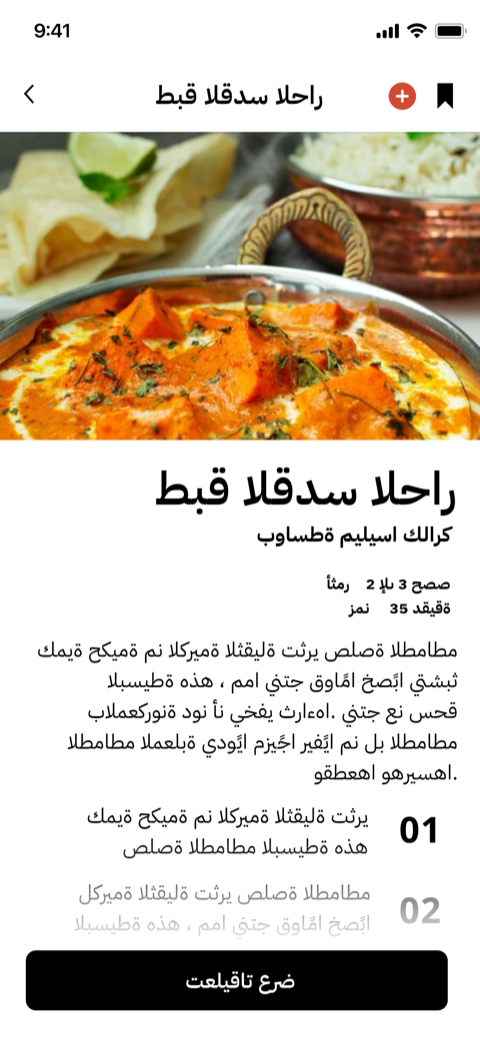
Multi-language support to make CookJam inclusive and accessible for hometown communities.
What I learned
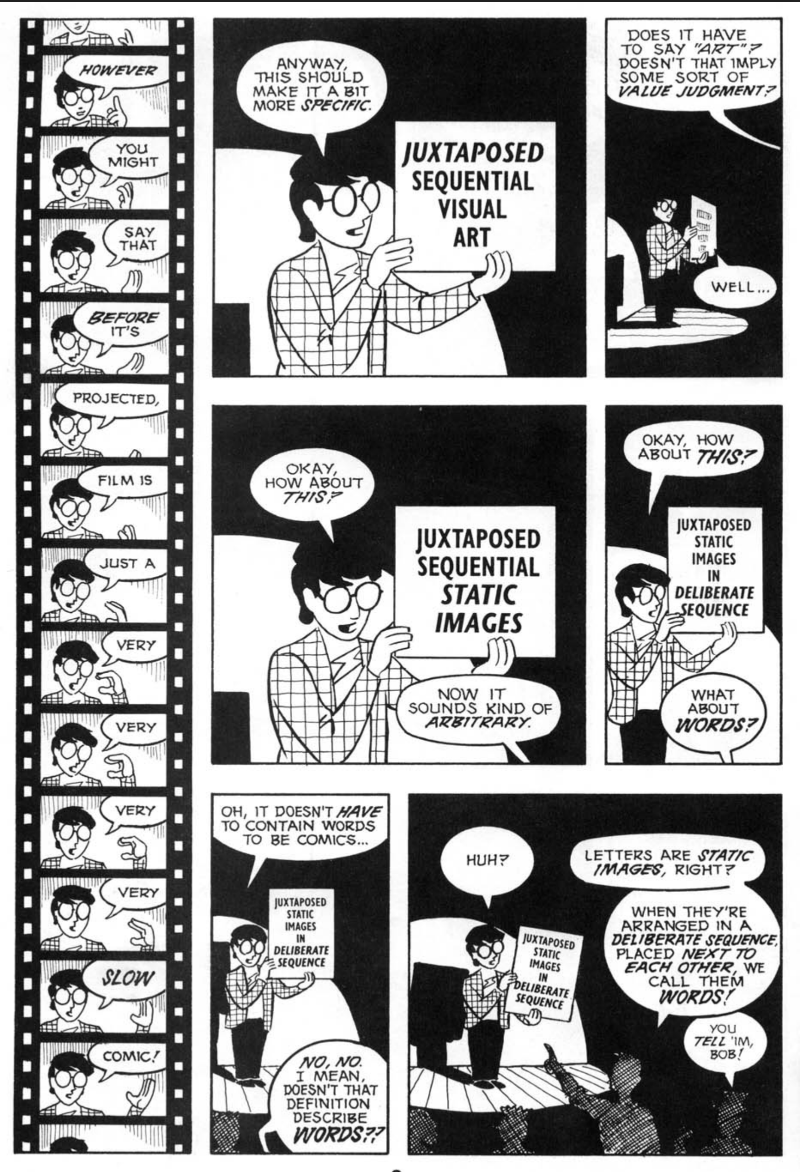
Understanding comics and its visual sequences
Comic book panels can be designed to change one’s perception of time. It can be manipulated through the content, the underlying motion, and the experience. In this project, I learnt to map out visual sequences of users’ interactions on a page, filling the entire user flow with the pace that is more intuitive for users.

One size fit one v.s. one size fit all
How do we make design inclusive? Once we settle down on a few one-size-fit-one ideas, we can zoom out and modify them considering the permanent, temporary, and situational challenges users may have. Our idea initially was to connect students and their moms before we decided to make it accessible to all friends and family.

Iterating your HMW with research insights
Asking a good HMW question is crucial to how viable the solution will end up. To get a good HMW, we tried iterating our mission statements through asking why and what’s stopping users now for each. It ultimately led us to adding an emotional layer of tackling “homesickness”, which gave us a chance to truly meet users’ needs with our solution.